The best Gobi Desert travel combined with the central Mongolian travel.
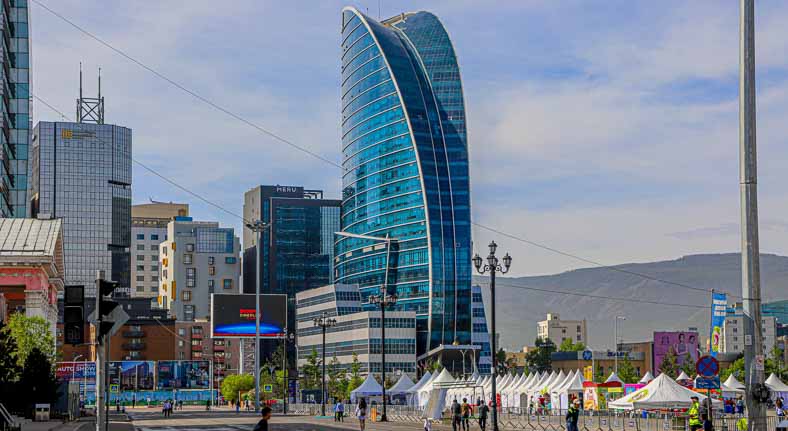
First, you will sightsee the capital Ulaanbaatar city, including a visit to Gandantegchilen monastery in the ger district at the heart of the town, a large bronze statue of Genghis Khan at the central square, and the National Museum of Mongolia, which displays a wide range of displays, from historic artifacts to cultural items. You also climb Zaisan Hill to see a panoramic combination of modern skyscrapers with the ger district stretching over mountains as far as the eye can see.
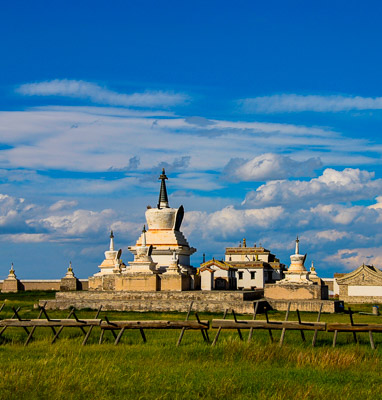
The historic Orkhon Valley, once the capital of the world's largest land empire, now hosts the ancient monastery Erdenezuu and remnants of the historical city.
When moving southwards to the Gobi Desert, the landscape broadens, edging towards the horizon. Though the scenery flattens, the landscapes change continuously, attracting the visitors' curiosity.
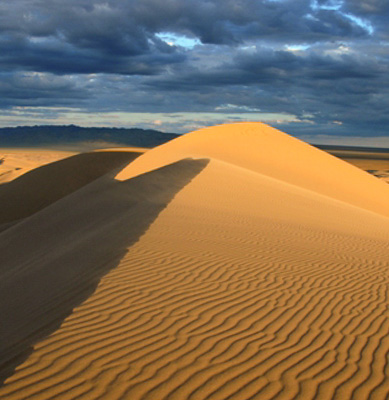
In the following days, you explore the ruins of the ancient monastery built on the Gobi Desert's largest river shore, a dinosaur cemetery site, Flamming Cliffs, and challenge yourself to climb Khongor Dunes, known as the singing sand.
You will also visit nomadic families, experience horse and camel riding and trek through the lush green valley of Gobi Desert National Park.
Itinerary
Day 1: Arrive in Ulaanbaatar and city sightseeing
Upon your arrival, our friendly guide and skilled driver will warmly welcome you at the airport or railway station. If time allows, you'll embark on an enchanting city sightseeing tour. First, you will visit Gandantegchilen Monastery. Here, you’ll be captivated by the impressive array of religious artifacts that reflect the rich spiritual heritage of Mongolia. One of the highlights of your visit will be the breathtaking 26-meter-tall gilded statue of Buddha, known as Megjid Janrasag, which radiates tranquility and reverence. Next, visit the National Museum of Mongolia, followed by a visit to Central Square, and drive to Zaisan Memorial to see the panoramic view of Ulaanbaatar. Dine in a fine Mongolian restaurant.
Accommodation: 3* hotel
Meals: Lunch, Dinner
Day 2: Elsentasarkhai the northern edge of the Gobi Desert, visit a nomad family and horse riding
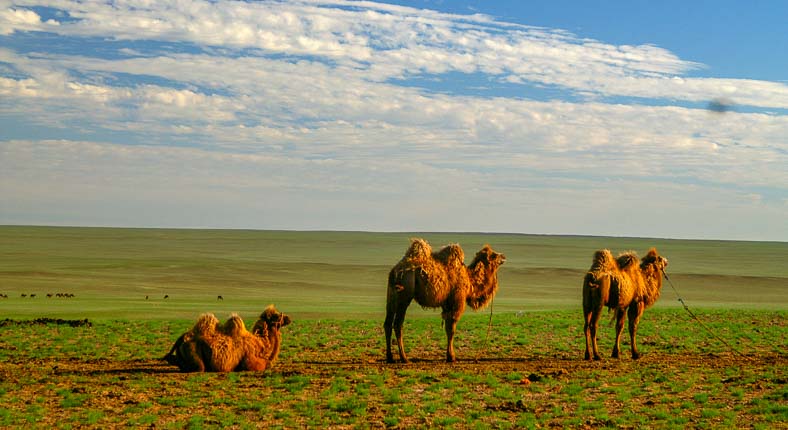
Elsentasarhai is a unique place that represents features of the Gobi desert, mountain steppes, and grasslands in a single area. We arrive at Elsentasarkai by lunchtime and visit a nomadic family to explore the nomadic life and ride horses on the steppes. You will enjoy an authentic Mongolian barbecue for lunch in the nomads’ ger.
Accommodation: Ger camp
Meals: Breakfast, Lunch, Dinner
Day 3: Kharkhorin, ancient Monastery Erdenezuu
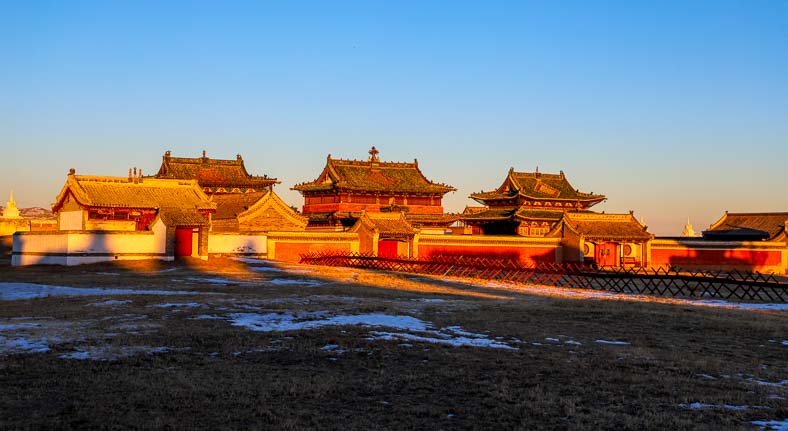
Kharkhorin, formerly known as Kharakhorum, was once the capital of the Great Mongol Empire, the largest land empire in world history. After the capital was relocated to what is now Beijing and following the decline of the empire, Kharakhorum was abandoned and subsequently destroyed by Ming soldiers in 1388. Today, the ancient monastery of Erdenezuu stands in the vast valley of the Orkhon River, alongside the town of Kharkhorin. Visitors can explore valuable religious artifacts in the monastery museum, admire its stunning architecture, and visit the Kharakhorin Museum, which showcases remnants of the ancient city.
Accommodation: Ger camp
Meals: Breakfast, Lunch, Dinner
Day 4: Travel to Ongi Monastery in the Gobi desert
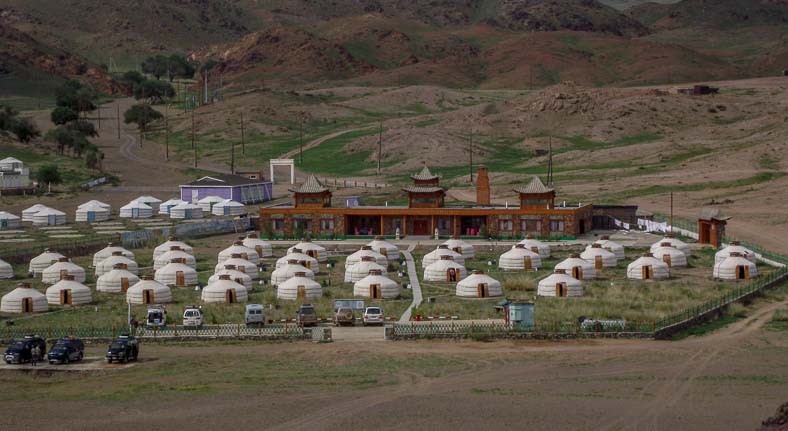
Today's tour takes us to the transition zone between the mountain steppes and the Gobi Desert. Ongi Monastery was one of the largest monasteries in Mongolia, consisting of two separate complexes with more than 30 temples situated along the shores of the Ongi River, surrounded by the mountains of the Gobi Desert. The temples were destroyed during the socialist purge of the 1930s. The ruins of the monasteries cover a vast area. Visit a new active temple and a ger museum, explore the monastery ruins, and climb a nearby mountain for views of the surrounding picturesque areas from an elevated vantage point.
Accommodation: Ger camp
Meals: Breakfast, Lunch, Dinner
Day 5: Flaming Cliffs
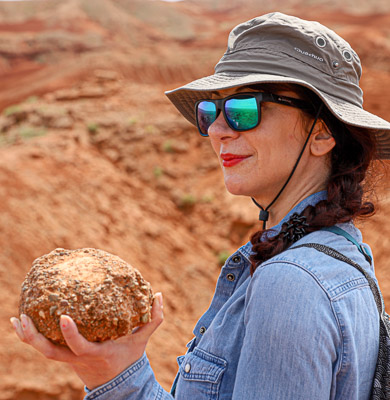
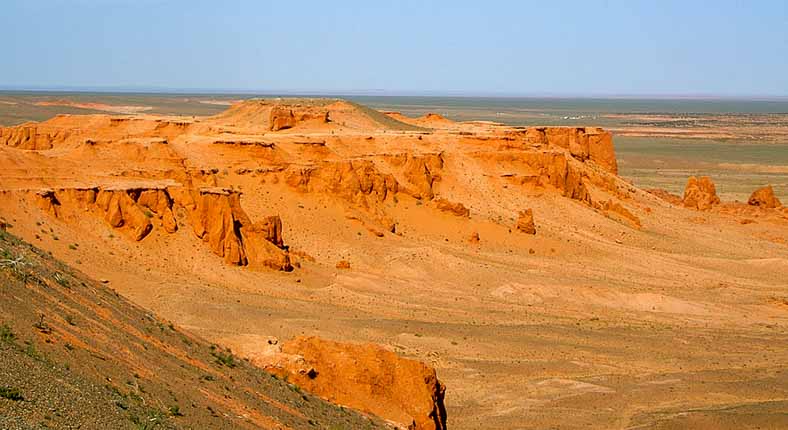
Today, you travel over the vast open Ongi steppes and through slate stone mountains heading to the Flaming Cliffs, where American explorer Roy Chapman Andrews found the cemetery of dinosaurs and the first dinosaur eggs ever discovered in the world. Along the way, you will explore the Gobi Desert tree grove named “Bayanzag.” Bayanzag means “rich in saxaul trees.” This tree only grows in the Central Asian desert. In the afternoon, you will visit an information center of a Palentologically important site, take amazing pictures of a camel caravan statue on the vast steppes, and enjoy a reddish view of the Flamming Cliffs.
Accommodation: Ger camp
Meals: Breakfast, Lunch, Dinner
Day 6: Khongor Sand Dunes
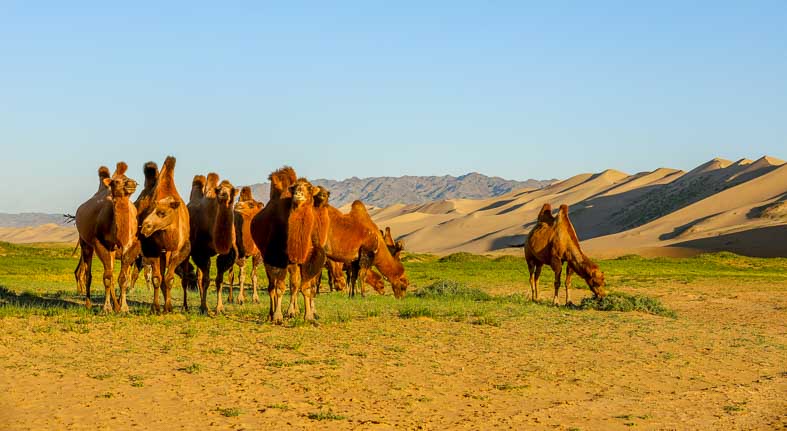
Our journey will continue to the Khongor Sand Dunes, which are part of the Gobi Gurban Saikhan National Park. After reaching the dunes, you will climb the dunes, visit a nomad family, and ride two-humped camels. If you're able to climb one of the tallest dunes, try spreading the sand northward against the wind to discover why locals refer to these dunes as the "Singing Sand." The view from the top will reward you after the challenging climb.
Accommodation: Ger camp
Meals: Breakfast, Lunch, Dinner
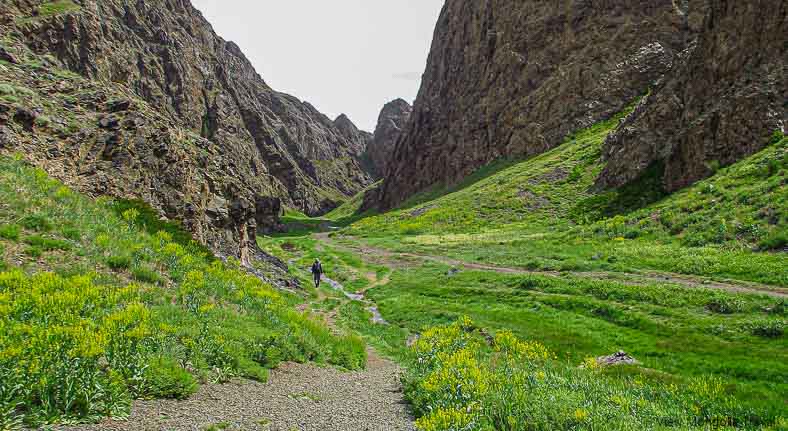
Day 7: Drive to Gobi Gurban Saikhan Mountain National Park, hiking in Eagle Valley
The Gobi Gurban Saikhan is a stunning mountain range located in the Gobi Desert. This picturesque national park is rich in wildlife and offers many scenic locations. One of the highlights is Yoliin Am, also known as Eagle Valley, which can be accessed by car. Once we reach the designated parking area, we will walk through the beautiful valley and enter a sheer rock canyon that receives no sunlight, keeping it icy until mid-June. The hike lasts approximately 2.5 to 3 hours, including the round trip to the valley and back to the vehicle. Bearded eagles, elusive wild sheep, and ibexes are indigenous to the valley.
Accommodation: Ger camp
Meals: Breakfast, Lunch, Dinner
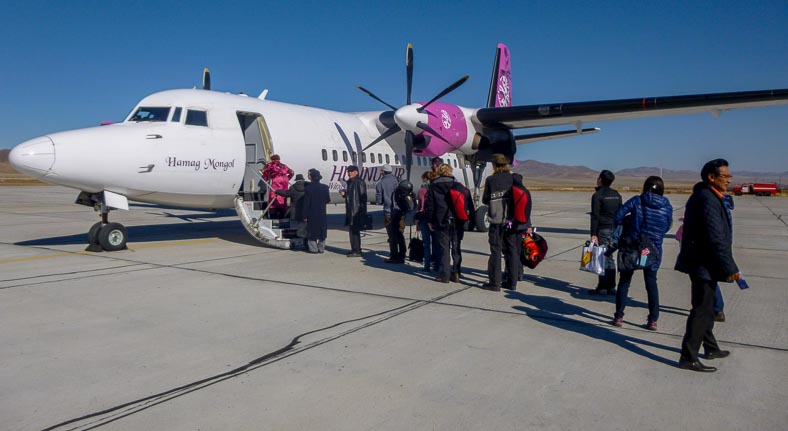
Day 8: Fly back Ulaanbaatar
Fly back to Ulaanbaatar and land in Ulaanbaatar after a 1.5-hour flight. The driver will transfer you to a hotel downtown. Free day to relax.
Accommodation: Ger camp
Meals: Breakfast
Day 9: Transfer to the airport/railway station.
We will transfer you to the airport/railway station.
Meals: Breakfast
Background
Is the Gobi Desert and Central Mongolia Travel suitable for you?
This is a regular tour that includes overnight stays in ger camps in the countryside and a 3* hotel in Ulaanbaatar. The tour doesn't involve any strenuous physical activities. Driving is an inseparable part of Mongolian travel, allowing for the exploration of its diverse scenery. Even though we planned the trip to have as little driving as possible, the approximate driving time will be 4 to 5,5 hours. The itinerary features light activities, such as 1 to 3 hours of gentle hiking and opportunities for horse and camel riding with the assistance of local wranglers. The most challenging aspect of the tour is climbing the high sand dunes in the Gobi Desert, although this is not mandatory. If you prefer, you can enjoy the sand dunes and the surrounding area by climbing one of the foothills instead.
Meals
The tour meals are included according to the itinerary. In the countryside, ger camps offer a mixture of both European and Mongolian cuisine, with meat being the main ingredient served at lunch and dinner. Alongside meat, there will be a selection of vegetables, salads, and soups available. Traditional Mongolian meals often feature even more meat.
An example meal plan is as follows: for breakfast, you can expect tea or coffee, bread, jam, butter, eggs, and sausage. Some ger camps may also offer additional options such as cookies, cheese, cereals, fruits, and pancakes.
For lunch, the menu typically includes salads, soups (which may be cream-based, vegetable, or traditional Mongolian), along with a main course that could be pasta, rice, vegetables, and various meats like beef, mutton, chicken, or fish (especially near lakes or rivers), followed by dessert and tea. Dinner usually consists of a salad, main course, dessert, and tea.
When dining with nomads, you will have the opportunity to try authentic Mongolian meals, which do not typically feature multiple courses served at the same time. If you are a vegetarian or have any dietary restrictions, please inform us in advance so that we can accommodate your needs.
We will provide two 0.5-liter bottles of water each day, but if you prefer, you can request one larger 1.5-liter bottle instead of the two smaller ones.
Accommodation
The package includes a 2-night stay at a centrally located 3-star hotel. In the countryside, you will stay in traditional gers, which are the customary dwellings found in ger camps. All ger camps have electricity supplied either through a central line or from generators/solar power, depending on their location. The meals at the ger camps are western-friendly, and the dining experience in the camp restaurants is comfortable. However, please note that the bathrooms at the ger camps are located in a separate building for shared use. Private bathroom gers are available for an additional fee. For more detailed information about accommodation options, please visit our recommended hotels in Mongolia and the Mongolia ger camps.
Guides
The majority of our company's guides are English-speaking. We also have some guides who speak German, French, Spanish, and Japanese. They are all friendly and helpful, with most having been born and raised in the countryside. Therefore, they possess in-depth knowledge of every aspect of Mongolia and have at least three years of guiding experience. During the horse and camel riding, a local guide will follow you.
Transportation
The majority of our tours were designed with four-wheel drive Japanese vans driven by experienced, friendly, and good mechanic-drivers. The tour includes a one-way internal flight from the Gobi Desert to Ulaanbaatar, which will help us reduce the driving and give you free time to relax, shop, or take an optional city tour. Different vehicle types are available at your request and subject to an additional fee. You may check the travel vehicle details at the Mongolia transportation.
When is the best time to travel to the Gobi Desert?
The most suitable time to travel to the Gobi Desert is between 15 May and 1 October. During this period, the weather will be warm and enjoyable. The Gobi Desert or southern Mongolia is the most temperate region in Mongolia. The annual temperature is usually 2-10 degrees warmer than in other parts of Mongolia. However, you should not expect stable weather during the trip or in some periods, as Mongolia is elevated at least 700 m above the surrounding Siberian plateau and Chinese territory. Therefore, the weather fluctuates significantly, both hourly and by day and night. The temperature drops by 10-20 degrees in the evening and at night. There will be the occasional chill wind in May, September, and October, while windstorms are frequent in March, April, and the first half of May.
Average monthly temperatures are +20 degrees, with the highest temperatures of 30 degrees daytime, and the night temperature may drop to +8 degrees at the end of May, June, late August, and September. July could be the hottest or the wettest. Average day temperature is +28 degrees, the hottest +38 degrees, and night temperature could drop to +12 degrees, although some nights could be sultry, particularly in July. The temperature could dramatically fall if it rains. For your pre-departure preparation, please check the discovery tour's detailed packing list.
As well as, please check attractions in Central Mongolia, and Gobi desert attractions.